
The 10 best novels which are longlisted for The JCB Prize for Literature 2018.
- Siddu Nirvana

- Sep 10, 2018
- 7 min read
Updated: Jul 28, 2021
The JCB Prize for Literature is a Rs 25 lakh award presented each year to a distinguished work of fiction by an Indian author, as selected by the jury.
The Prize aims to enhance the prestige of literary achievement in India, and to create greater visibility for contemporary Indian writing. It has a particular focus on translation, and hopes to introduce readers to many works of Indian literature written in languages other than their own.
Each year, the Literary Director appoints a jury of prominent individuals from different fields, chosen in order to reflect the range and diversity of contemporary Indian life. The five members of the jury are alone responsible for selecting the longlist of ten, the shortlist of five, and the winner. Each shortlisted author receives Rs 1 lakh. The winning author receives a further Rs 25 lakhs. An additional Rs 5 lakhs is awarded to the translator if the winning work is a translation.
Administered by the Advisory Council of the JCB Literature Foundation with the very highest standards of integrity and transparency, the Prize will continue to discover and reward great Indian writing for decades to come.
The 2018 longlist.

All the lives we never lived by Anuradha Roy.
Anuradha Roy’s deeply moving novel tells the story of men and women trapped in a dangerous era uncannily similar to the present. Its scale is matched by its power as a parable for our times.
Anuradha Roy is the author of An Atlas of Impossible Longing, The Folded Earth, and Sleeping on Jupiter, which won the DSC Prize for Fiction 2016 and was longlisted for the Man Booker prize 2015. She lives in Ranikhet, India.

Jasoda: A Novel by Kiran Nagarkar.
Kiran Nagarkar's trenchant narrative traces the journey of a woman of steely resolve and gumption, making her way through an India that is patriarchal, feudal, seldom in the news, and weighed down by dehumanizing poverty.
Kiran Nagarkar is one of India's most highly regarded writers. His critically acclaimed novel Cuckold was given the Sahitya Akademi Award in 2001. Nagarkar received the Order of Merit of the Federal Republic of Germany in 2012. Both the Tata Literature Live! and the Chandigarh Literary Fest gave him a Lifetime Achievement Award in 2015 and 2016 respectively. His novels have been translated into German, French, Italian, Spanish, Portuguese as well as Marathi.

Latitudes of longing by Shubhangi Swarup.
An astounding exploration of intense longings, Shubhangi Swarup's novel begins in the depths of the Andaman Sea, and follows geological and emotional faultlines through the Irrawaddy delta and the tourist-trap of Thamel, to end amidst the highest glaciers and passes of the Karakorams.
Shubhangi Swarup is a journalist and educationist. She was awarded the Charles Pick Fellowship for Creative Writing at the University of East Anglia, and has also won awards for gender sensitivity in feature writing. She lives in Mumbai.

Half the night is gone by Amitabha Bagchi.
By writing about mortality and family, Vishwanath confronts the wreckage of his own life while seeking to make sense of the new India that came into being after independence. Spellbinding and penetrating, Half the Night Is Gone raises questions of religion, literature and society that speak to our fractured times.
Amitabha Bagchi is the author of three novels. The first, Above Average, was a bestseller. His second novel, the Householder, was published to critical acclaim and the third, This Place, was shortlisted for the Raymond Crossword Book Award 2014. Bagchi lives in New Delhi with his wife and son.

Jasmine Days by Benyamin, translated by Shahnaz Habib.
Sameera Parvin moves to an unnamed Middle Eastern city to live with her father and her relatives. She thrives in her job as a radio jockey and at home she is the darling of the family. But her happy world starts to fall apart when revolution blooms in the country. As the people’s agitation gathers strength, Sameera finds herself and her family embroiled in the politics of their adopted land. She is forced to choose between family and friends, loyalty and love, life and death.
Benyamin’s Goat Days won him the Kerala Sahitya Academy Award in 2009 and was shortlisted for the Man Asian Literary Prize and the DSC Prize for South Asian Literature.
Shahnaz Habib has written for the New Yorker and the Guardian and her fiction and essays have been published in the Caravan, Afar and other magazines and collected in anthologies.
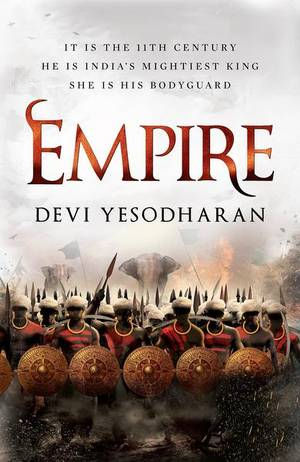
Empire by Devi Yeshodharan.
An Indian empire at the peak of its power. A great port heaped with spices, silks, jewellery, perfumes, weapons. Everyone wants a share of the riches of Nagapattinam. When a Greek pirate ship sails in to loot the wealth of the Cholas, it is brutally defeated by the navy and forced to pay a compensation. A payment that includes a twelve-year-old girl, Aremis.
Devi Yesodharan was a speech-writer for Infosys chairman N.R. Narayana Murthy. Now, when she isn't obsessively reading up on the Cholas, she works as a co-founder on Trendlyne, a financial investing platform. Empire is her first novel.

Poonachi: or the story of a black goat by Perumal Murugan, translated by N Kalyan Ram.
Poonachi is the story of a goat who carries the burden of being different all her life, of a she-goat who survives against the odds. It is equally an expression of solidarity with the animal world and
the female condition. The tale is also a commentary on our times, on the choices we make as a society and a nation, and the increasing vulnerability of individuals, particularly writers and artists, who resist when they are pressed to submit.
Perumal Murugan is the author of six novels, four collections of short stories and four anthologies of poetry in Tamil. Three of his novels have been translated into English: Seasons of the Palm, which was shortlisted for the Kiriyama Prize in 2005, Current Show and One Part Woman. He was a professor of Tamil at the Government Arts College in Namakkal before taking to writing full-time.
N. Kalyan Raman is a Chennai-based translator of contemporary Tamil fiction and poetry into English. He has published ten volumes of Tamil fiction in translation, working with a range of authorial voices and has also translated and published over 200 poems by leading contemporary Tamil poets in journals and anthologies from India and abroad. He also regularly contributes essays, reviews and articles on literature, culture and public policy. In February 2017, he received the prestigious Pudumaipithan award, given by Vilakku, for his contribution to Tamil literature through his translations.
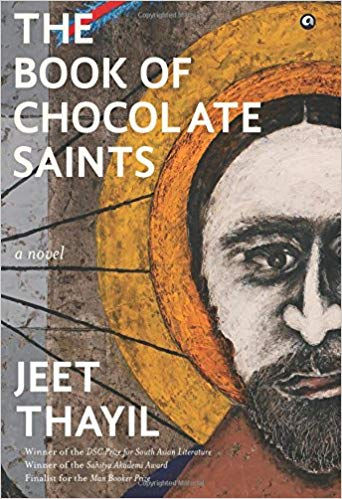
The book of chocolate saints by Jeet Thayil.
In incandescent prose, award-winning novelist Jeet Thayil tells the story of Newton Francis Xavier, blocked poet, serial seducer of young women, reformed alcoholic (but only just), philosopher, recluse, all-round wild man and India’s greatest living painter.
Narrated in a huge variety of voices and styles, all of which blend seamlessly into a novel of remarkable accomplishment, The Book of Chocolate Saints is the sort of literary masterpiece that only comes along once in a very long time.
Jeet Thayil was born in Mamalasserie, Kerala, in 1959 and educated in Jesuit schools in Bombay, Hong Kong and New York. He worked as a journalist for twenty-three years before writing his first novel. His five poetry collections include Collected Poems, English and These Errors Are Correct, which won the 2013 Sahitya Akademi Award. He is the editor of The Bloodaxe Book of Contemporary Indian Poets. Jeet Thayil’s novel Narcopolis won the 2012 DSC Prize for South Asian Literature and was shortlisted for five other prizes, including the Man Booker Prize, the Man Asian Literature Prize and the Commonwealth Prize.
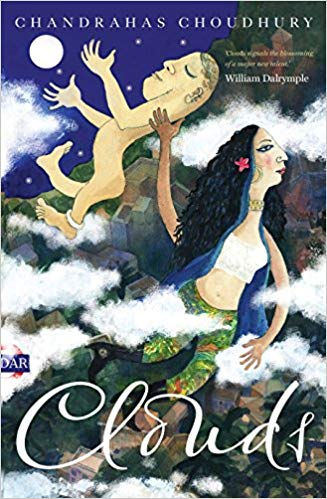
Clouds by Chandrahas Choudhury.
By one of India’s most celebrated young writers Chandrahas Choudhury, Clouds is a story about earth and sky, love and friendship, language and power. At its simplest, it illuminates the inner lives of half-a-dozen characters forging their own paths in one great city. Yet peel away the surface layers and what emerges is a vast, subtle, outstanding portrait of Indian democracy at seventy.
Chandrahas Choudhury's first novel, Arzee the Dwarf, was shortlisted for the Commonwealth First Book Prize, translated into German and Spanish and chosen by World Literature Today as one of ‘60 Essential Works of Modern Indian Literature in English’. He is also the editor of a short introduction to the pleasures of Indian literature India: A Traveller's Literary Companion. A graduate of Hindu College, Delhi, and Trinity College, Cambridge, he was also a visiting fellow at the International Writing Program at the University of Iowa in 2010. He lives between Delhi, Mumbai and Bhubaneswar.

When the moon shines by day by Nayantara Sahgal.
India has changed. Rehana finds her father’s books on medieval history have been ‘disappeared’ from bookstores and libraries. Her young domestic help, Abdul, discovers it is safer to be called Morari Lal in the street, but there is no such protection from vigilante fury for his Dalit friend, Suraj. Kamlesh, a diplomat and writer, comes up against official wrath for his anti-war views. A bomb goes off at Cyrus Batliwala’s gallery on the opening day of an art show.
In this brilliant, dystopian satire, Nayantara Sahgal draws a telling portrait of our times.
Nayantara Sahgal is the author of several works of fiction and non-fiction, the first of which, Prison and Chocolate Cake, an autobiography, was published in 1954. Her works include classic novels such as Rich Like Us, Plans for Departure and Lesser Breeds. She has received the Sahitya Akademi Award, the Sinclair Prize and the Commonwealth Writers’ Prize. She is a Member of the American Academy of Arts & Sciences. She has been awarded the Diploma of Honour from the International Order of Volunteers of Peace (Italy), and an Honorary Doctorate of Letters from the University of Leeds. She returned her Akademi Award in 2015 in protest against the murder by vigilantes of three writers, and the Akademi’s silence at the time. She has been a Vice President of the PUCL (People’s Union for Civil Liberties) and is engaged in an ongoing protest against the assaults on the freedom of expression and democratic rights.
Announcement of Shortlist is on 3 october 2018.


Comments